Why Short-Form Content Is Critical for AI Search, SEO, and Brand Discovery in 2025

Will Phillips
Marketing Manager
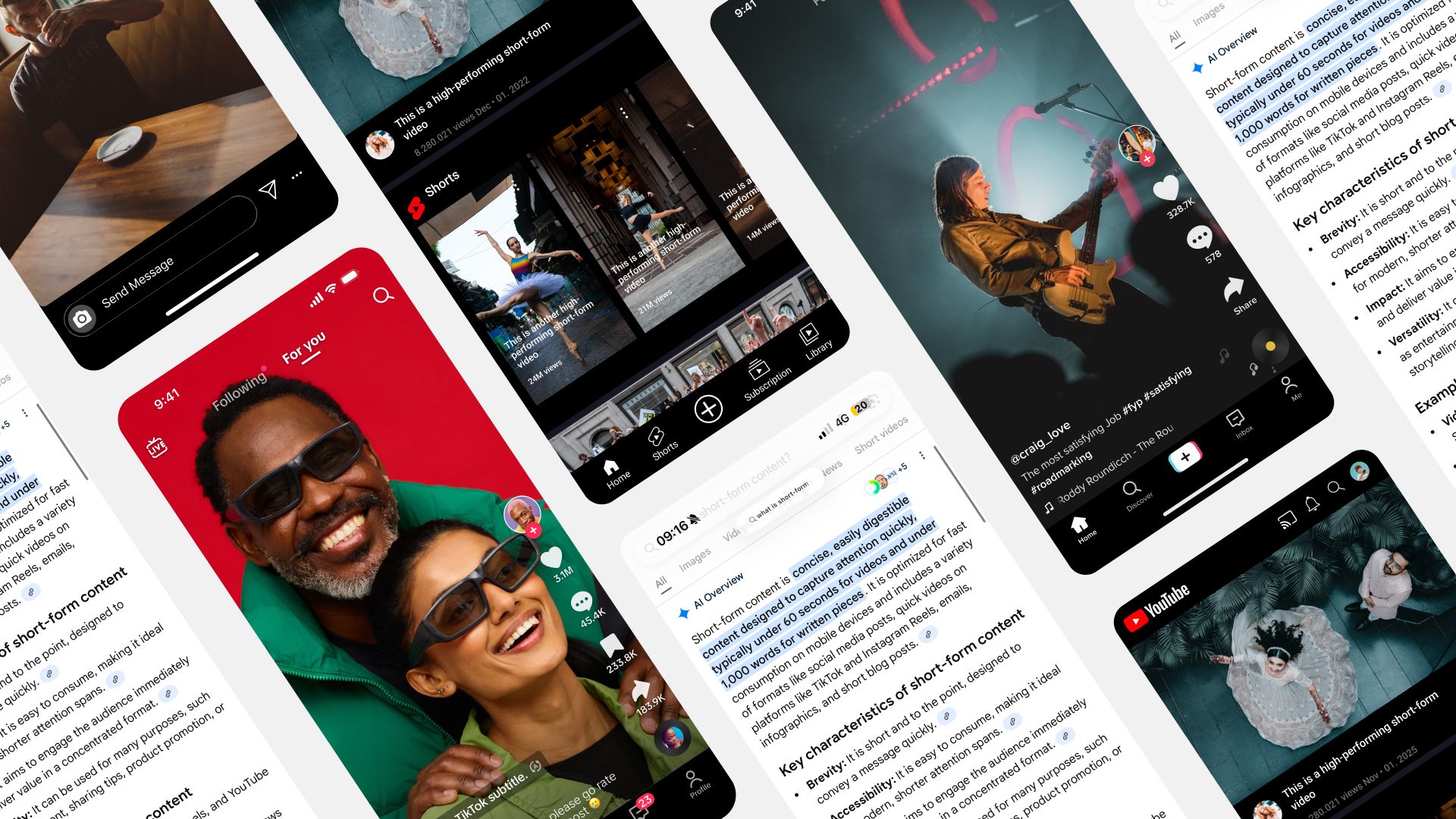
Every morning, millions of people reach for their phones before they even brush their teeth. Notifications, feeds, and video clips flood the screen. A 20-second video catches the eye. It gets a like. Maybe even a share. It took less than half a minute, but it did what hours of brand-building often fail to do; connect.
This is the power of short-form content. It is no longer just a format. It is a frontline. And in a world fuelled by AI-driven discovery, machine-led overviews, and shifting attention, mastering short-form content is no longer a nice-to-have. It is essential.
TL;DR
Short-form content isn’t just a social trend—it’s a discovery tool. From fuelling AI overviews to boosting engagement, it now plays a vital role in how your brand is found, judged, and remembered. This guide unpacks why it matters, how to do it well, and how to turn short clips into long-term impact across every channel.
The narrative about shrinking attention spans is overplayed. People still pay attention, they are simply choosy about what earns it. What has changed is how content is delivered, and more importantly, how it is discovered.
We now operate in the attention-based era. This is not about battling for time. It is about proving relevance faster than ever before. The average viewer decides in less than three seconds whether to engage with a piece of content. Platforms like TikTok, Instagram Reels, YouTube Shorts and even LinkedIn video are designed around this principle.
But here is the kicker: short-form content now feeds AI Overviews (AEO) and Generative Engine Optimisation (GEO). Your short clips are no longer just for social. They are training data for the algorithms deciding what shows up in search, recommendations, and automated brand summaries.
As noted in a recent article by HubSpot, short-form content is one of the most engaging and psychologically compelling formats in digital marketing today.
Short-form content is typically video-based and under 90 seconds, often performing best in the 15 to 60 second range. But it is not the length that defines it. It is the clarity. The purpose. The immediate relevance.
Effective short-form content presents one idea. One insight. One message. And it does so in a way that feels native to the platform and the audience.
It also transcends platforms. While TikTok may have popularised the vertical scroll, the format has now taken root across Meta, YouTube, LinkedIn, and even on-site video modules. Smart brands use it not as filler, but as a strategic tool to support larger content goals.
In a recent piece on content strategy structure, we explained how short-form content can be mapped across key stages of the customer journey.
Short-form content is not the enemy of depth. It is the entry point. Think of it as the spark; the fast win that earns permission to go deeper.
A sharp 30-second video introduces a problem or insight. A long-form guide explores the full solution. A short-form case study snippet builds intrigue. A full whitepaper delivers the validation. Together, they work as a journey.
At Brave, we build content ecosystems where each piece is strategically placed. Short-form earns attention. Long-form builds trust. The result is a journey that is fluid and joined-up. Our content marketing services are structured this way by design.
This modular approach also makes your content more adaptable for AEO and GEO. Google, TikTok and YouTube all pull from both short and long formats to build their overviews. If your content is structured to link one to the other, you gain more surface area in those systems.
Not all short-form content is equal. The best-performing brands use a mix of:
According to Contentoo’s guide, the power of short-form is in the emotional and contextual framing. It gives your brand the ability to respond in real time and be part of cultural moments.
Short-form content has tangible, measurable advantages.
Cost-effective production: You do not need a film crew. A mobile phone, a ring light and a clear message are often enough to compete with polished campaigns.
Higher engagement rates: As reported by Writeful.ly, short-form videos regularly outperform longer formats on completion rates, especially on mobile.
AI and SEO visibility: Short-form content is increasingly indexed and surfaced by AI search. It feeds GEO and ensures your brand shows up in overview cards, search summaries and carousel features.
Cross-platform agility: Short clips can be reused and reformatted across channels, making them highly efficient for content teams with lean resources.
Human touch: Done right, it feels authentic, personal and engaging—exactly what modern audiences want from brand comms.
To succeed with short-form, brands need more than content. They need process.
Start with consistency. Decide what cadence you can realistically maintain. Whether it is three times a week or once a day, the algorithm rewards rhythm. More importantly, so does your audience.
Then focus on repurposing. Every webinar, article, or client conversation is a goldmine. One blog post can yield five videos. One webinar can become a month of content.
Encourage user-generated content. Your customers are already producing content. Invite them into your narrative. Feature their stories. Let them help shape the brand.
Measure what matters. Don’t chase vanity metrics. Completion rate, watch-through percentage, saves, shares and click-throughs are where the real insights live. Look for performance across both human and algorithmic behaviours. Are people engaging? Is the algorithm amplifying it?
As Ship 30 for 30 notes, short-form can be the most effective entry point into longer customer journeys when measured and structured correctly.
Short-form content is not just about trends. It is about territory. The space where discovery happens. The place where decisions are shaped.
In a world of AI-led answers and shrinking human attention, short-form content becomes the way your brand earns relevance.
It connects faster. It scales better. It performs harder. And when done well, it drives outcomes across every stage of your journey.
If your brand is ready to build short-form content that actually converts, ranks, and earns attention, we should talk.